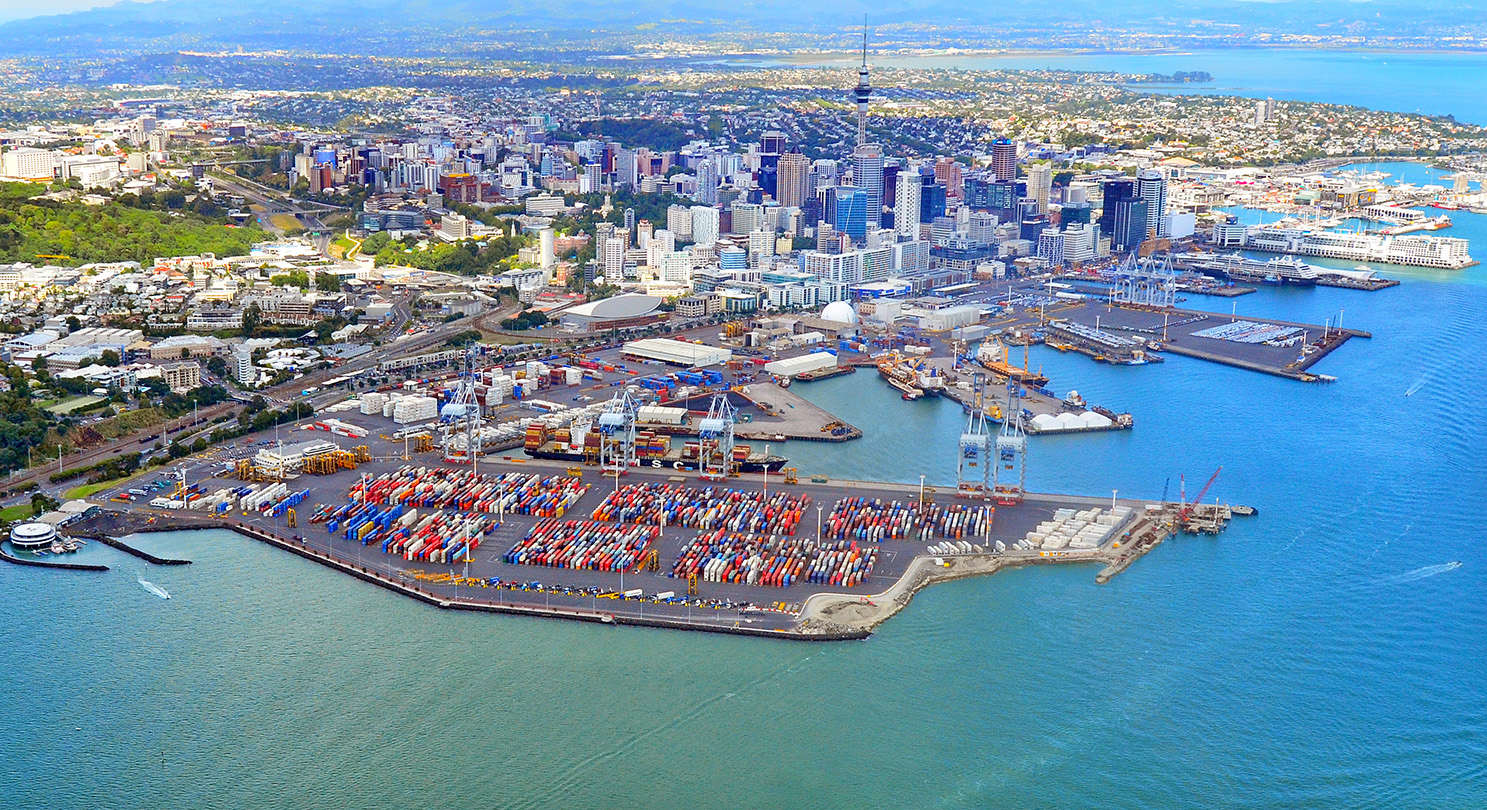
The Maritime Union has warned how uncertainty around new proposals for Ports of Auckland is a threat to the stability of the Auckland and the wider economy.
Maritime Union of New Zealand National Secretary Craig Harrison says there is growing concern about the direction of the port debate.
The Auckland Council is considering options behind closed doors to relocate the Ports to make way for ‘water features.’
It is also reviewing options to sell an operating lease for the Ports to a global network terminal operator, and has commissioned consultants to seek expressions of interest.
Mr Harrison says there seemed to be no clear idea as to what the end goal was, the costs involved, and how the plan would work in practice.
He says it is unclear how simultaneously privatizing and relocating the Port is going to work let alone the proposed waterfront redevelopment.
“This latest proposal for pools and barbies on the waterfront is simply not serious.”
He says it makes no sense for the Council to commit to massive expenditure on waterfront redevelopment when claiming Auckland was in financial crisis and cutting the budget for parks and libraries for the rest of Auckland.
“It is unclear what is the primary motive – is it to come up with short term band aid for Auckland’s financial issues, is it to hand over commercial real estate to developers, or is it to provide salt water pools for well off central city dwellers?”
Mr Harrison says the primary purpose of the Ports of Auckland was to facilitate trade and the Port was doing a good job at this.
He says on the hoof decision making with no clear strategy for future operations was a dangerous way to approach the future of New Zealand’s major import port.
“Remember that any of these schemes will add to congestion and rising costs for business and consumers if they disrupt port operations.”
The Ports is going through the a period of growth and stability under new leadership and it was a priority not to undermine this positive progress, says Mr Harrison.
“The cost of the failed automation project of the previous management was estimated at a $1.2 billion hit to the economy, and another failed experiment could cause even greater harm.”
Mr Harrison says any attempt to move or relocate port operations would be an extremely complex, expensive and long term project that needed to be part of a wider ports strategy.
He says the Northport option is currently a fantasy given the lack of infrastructure, no existing rail link, no coastal shipping plan, and already congested road links that were vulnerable to extreme weather events.
“Yet we are talking about effectively adding thousands more truck moves on some of the busiest roads in the country if we go down this track.”
Mr Harrison says New Zealand needs a national ports strategy that integrates coastal shipping and rail, with a focus on supply chain resilience in a volatile global environment.
He says the Ports of Auckland should remain in public ownership as a strategic asset that was central to Auckland and New Zealand’s economy.