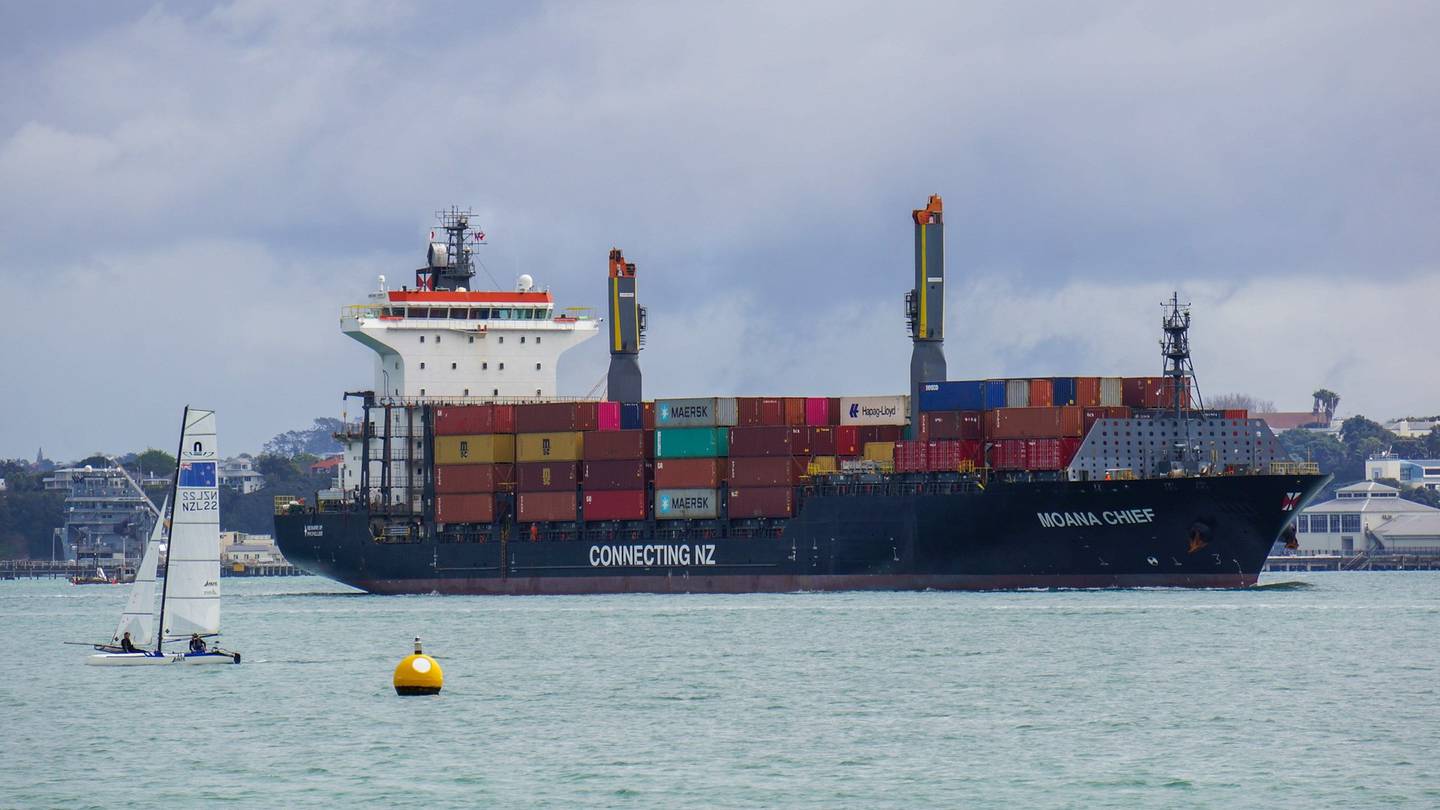
The Maritime Union says the developing crisis of congestion and delays is being made worse by a lack of New Zealand based coastal shipping in the freight space.
Maritime Union of New Zealand National Secretary Craig Harrison says there are multiple compounding stress points in the system, the latest of which was in trucking delays affecting the South Island.
Mr Harrison says these are the result of bad policy decisions over a long period which had led to the rundown of New Zealand coastal shipping.
“The problem is not so much a shortage of truck drivers, the problem is an imbalance in our system.”
He says New Zealand was struggling with unreliable overseas shipping schedules due to the global situation.
This had built up a backlog and placed great stress on the system, and delays and shipping congestion charges were becoming a major drag on the economy, he says.
The situation had now been compounded by staff shortages as Omicron variant COVID swept through the country, and the latest shock of war in the Ukraine which had introduced a major risk factor to our supply chains.
Mr Harrison says it was now apparent the Government needed to step in, and develop a New Zealand focused shipping line that could use chartered vessels to relieve the pressure on the system and target the needs of New Zealanders.
He says that smaller to medium sized importers and exporters were struggling while big operators had the capability to charter their own vessels.
Mr Harrison says New Zealand flagged and crewed ships could provide a regular and reliable service connecting regional ports with major international hub ports, thus relieving congestion.
He says having New Zealand flagged and crewed ships provided a level of security and could also be used on regional or international runs in the Asia Pacific region if required.
“The demand is obviously there, this is a crisis, and there is every indication that the global situation is going to remain a complex and challenging one.”
Mr Harrison says the Union is also campaigning for the retention of New Zealand coastal fuel tankers, which are under threat of removal in April due to profit-driven decisions by petrol companies.
He says New Zealand has left itself open to supply chain chaos in a volatile global situation and had to move quickly to reposition itself and build a resilient transport sector.
“We now need to move away from the ‘just in time’ approach, to the ‘just in case’ approach in supply chains and transport.”