
By Joe Fleetwood
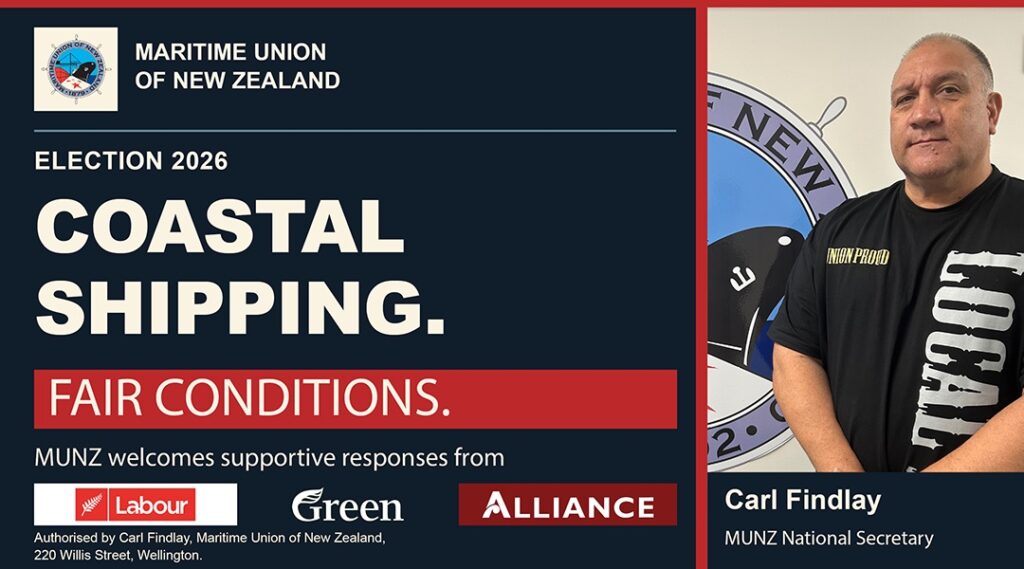
Maritime Union of New Zealand National Secretary
New Zealand has far too many deaths and injuries in the workplace. In the South Island, many workers are exposed to danger in their occupations.
Farms, forests, the maritime and fishing sector, meat processing, construction, mines and quarries – these are all some of the industries in which our people are hurt on a regular basis.
We have a far higher rate of workplace injury when compared to similar nations such as Australia or the United Kingdom. Something is badly wrong.
Following the tragic death of 29 workers in Pike River mine in 2010, and the subsequent Royal Commission and an Independent Taskforce on Workplace Health and Safety, the Government promised to pass a new, improved health and safety law by the end of 2014. The Commission and the Taskforce consulted widely and developed the new proposed law.
The Chair of the Taskforce, Rob Jager, a senior executive with Shell Oil, was blunt in his 2013 assessment of New Zealand’s workplace health and safety system, saying it had “a number of critical weaknesses” and “needs major systemic changes to save lives.”
New Zealand’s health and safety laws were not “fit for purpose.”
The proposed new Health and Safety Reform Bill included some positive aspects of Australian health and safety law, and strengthened the role of worker representatives.
It said that if workers in any job wanted to have a Health and Safety Representative, the employer must make that happen by giving them information, paying for them to get trained, and providing time and resources to do their role.
The proposed new law said that Health and Safety representatives could stop unsafe work, and issue notices to employers requiring them to address health and safety concerns.
The select committee of MPs considering this Bill reported back in July 2015 after delays.
Now, Government MPs have proposed changes that undermine its central purpose.
These changes include workers in businesses with less than 20 staff not being allowed to elect a Health and Safety representative if they wish. This is a serious step backwards.
It is essential that workers have real input into health and safety on the job, and that all businesses, whether large or small, are held to the same standards of providing a safe workplace.
Both unions and major business organizations in New Zealand agree the Health and Safety Reform Bill must not be tampered with.
Safe, well-regulated and productive workplaces are in everyone’s interests.
If New Zealand is to function as a developed, modern 21st century nation, then we need to get our health and safety laws fixed.
Workers must have the right to have a say on health and safety in their workplace.
It’s our lives and the wellbeing of our families at stake. All workers deserve to come home from work safe and well.
The Government must get the Health and Safety Reform Bill back on track and not water down its central protections for workers.