The dangers of loading heavy vehicles onto vessels are under the spotlight following the prosecution of KiwiRail and a towing contractor.
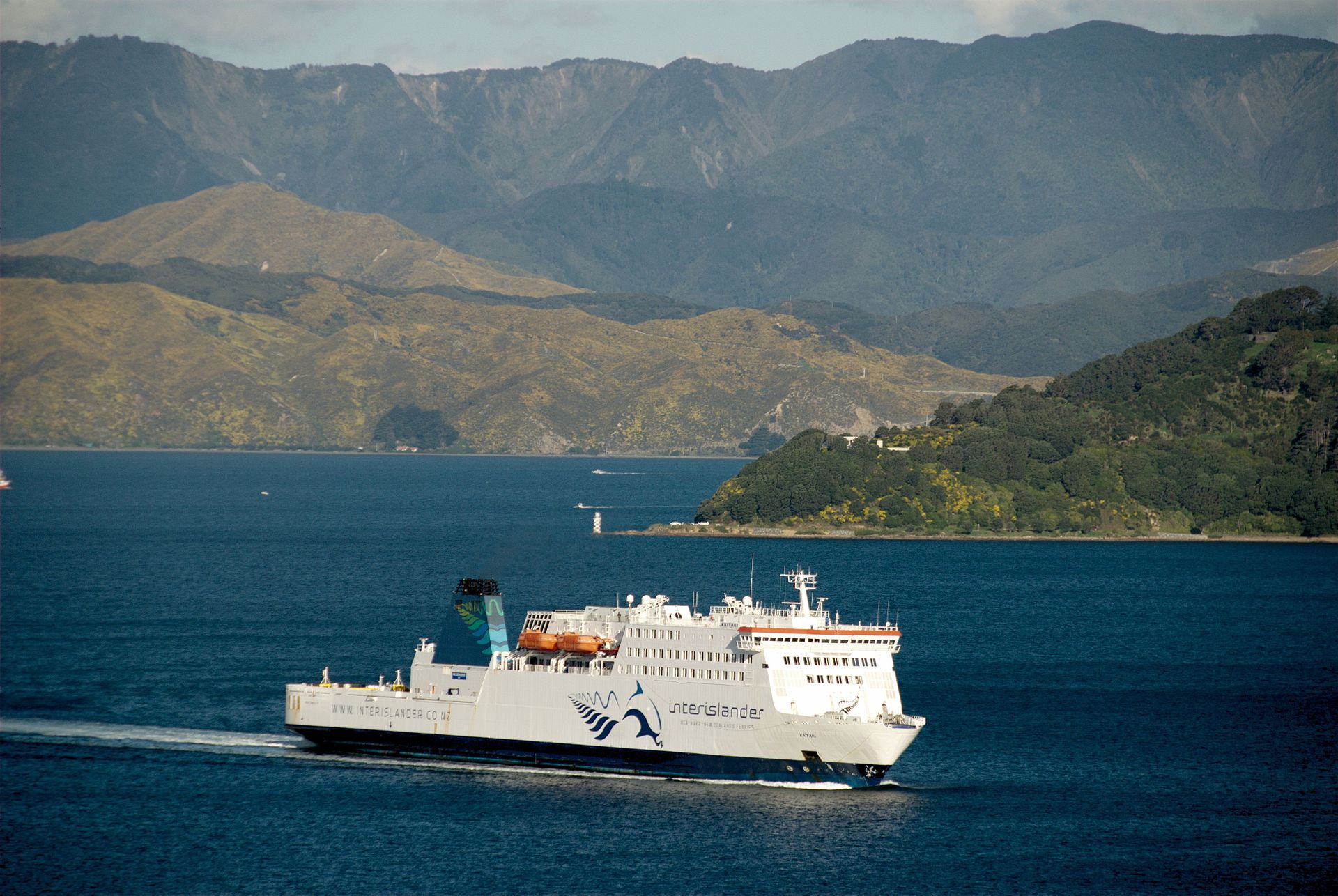
Higgins Towing Services (HTS) and KiwiRail were sentenced in the Wellington District Court on 17 October 2022 after pleading guilty to a range of charges relating to a 2020 injury on-board the interisland ferry the Kaitaki.
The Court awarded $58,000 in reparation to the victim, split between KiwiRail ($34,800) and HTS ($23,200). KiwiRail was fined a final amount of $240,500, while HTS was fined a final amount of $174,000.
The injury occurred when the driver of a heavy vehicle he had just driven aboard the ferry, left it to head towards the exit.
At that time, another truck was being driven into the same lane. As the truck moved forward and the space available reduced, the man became pinned between two trucks for about a minute.
The man suffered rib fractures and remained in hospital for three nights.
Maritime New Zealand Investigations Manager Pete Dwen says both organisations contributed to the incident through inadequate inductions and failing to develop and implement correct standard operating procedures.
“This was a needless accident, and should never have occurred.
“KiwiRail failed to provide a safe working environment by not having appropriate Standard Operating Procedures to address the risks of moving trucks, failing to make sure workers follow existing procedures and not properly inducting external contractors like those from HTS,” he says.
KiwiRail’s processes and HTS’s induction and training videos state HTS employees should always remain under the control of KiwiRail personnel when loading trucks on the Interislander ferries.
“This did not occur on this occasion, and there were serious consequences. If there was better collaboration between KiwiRail and HTS, in their training and processes, it is highly likely the incident could have been avoided.
“We know across ports and on vessels around New Zealand, companies are constantly working together, and this is a big reminder for them to work collaboratively and to brief external contractors of safety processes,” Pete Dwen says.
Maritime NZ investigators also found footage of personnel and members of the public walking around the Kaitaki alongside moving vehicles.
“While we understand people need to move from their vehicles to the seating areas/lounges; having to move past a working area can be very dangerous,” Pete Dwen says.
Kiwirail and HTS also pleaded guilty to charges of failing to notify Maritime New Zealand of the incident as soon as possible, and KiwiRail to a further charge of failing to preserve the scene of the incident.
One Response
Hi
I’m not closely involved in this accident.
I wish to ask.
Should we consider, separate services.
A freight service/ship.
A passenger service ship.
Separating passengers from the freight service reduces risk.
And the exclusive passenger service would run quickly,safely.
This separation of the services is a proven and common method of eliminating risk.
Often in situations of risk, an exclusion zone is used to protect people from harm .
David den Boogert
(Professional Heavy Vehicle Driver)
davidboogert@gmail.com
02102838067