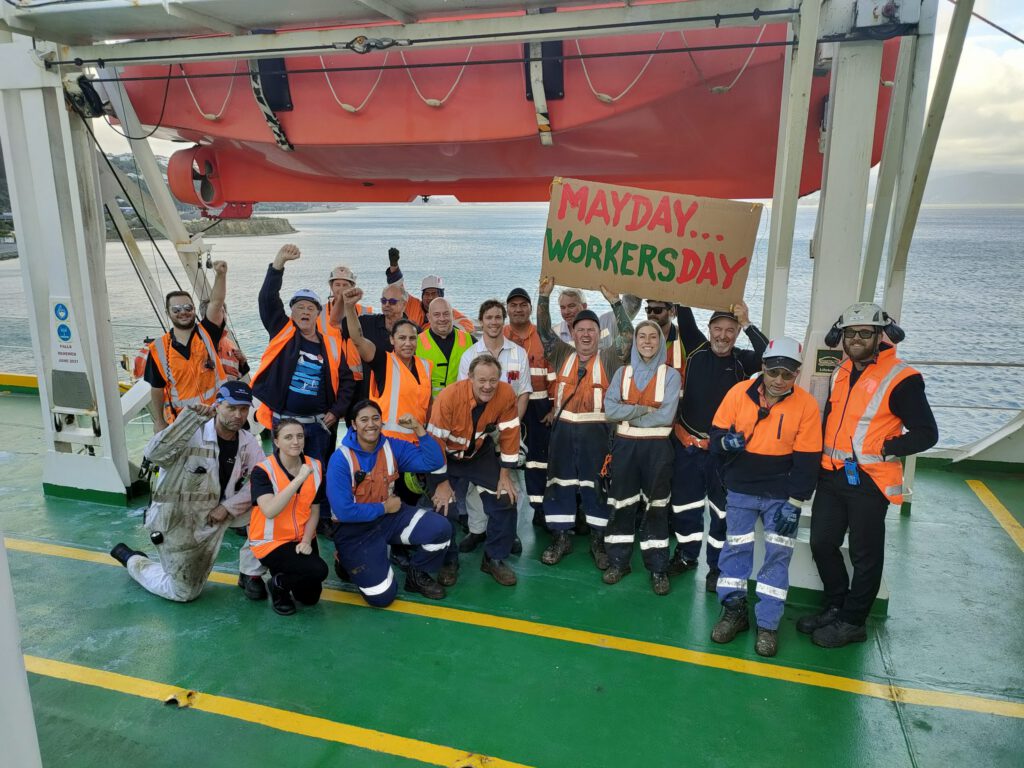
The Maritime Union says it intends to make sure a Government inquiry into transport and logistics is not just about promoting privatization in the ports sector.
Maritime Union of New Zealand General Secretary Joe Fleetwood says the Union will be taking an active and critical approach in its contributions to the Productivity Commission’s inquiry into International Freight Transport Services.
“We won’t be accepting any status quo thinking and ‘free market is best’ assumptions that sometimes accompanies these reports.”
Key issues for the Union include keeping control of New Zealand ports in New Zealand hands.
Mr Fleetwood says any move to privatize ports would quickly result in the control of New Zealand’s logistics infrastructure passing to GNT (global network terminal) operators and shippers, who would operate the system for their own benefit, not New Zealand’s benefit.
He says many problems with New Zealand ports currently come from lack of planning and co-ordination, not through lack of competition.
“The Maritime Union is proposing a KiwiPort concept where port ownership remains in community control but national co-ordination is used to minimize disruption and end the duplication of infrastructure we currently see.”
The Maritime Union had been arguing for years that secure permanent jobs, a career path for young people entering the industry, and world leading health and safety had to underpin any productivity gains.
“There is no point expecting productivity from casualized workers who are not properly trained and for whom there is no career path. But this is the approach of many employers in the industry.”
“We will be making sure that productivity is not just an accounting term for employer profit, but refers to the wellbeing of workers in the industry.”
He says the Union questions some of the assumptions suggested by the Productivity Commission, including a concept of competition as an intrinsic good.
“In the maritime industry, competition has driven corner cutting on health and safety which has led to deaths and injuries, downwards pressure on wages and conditions resulting in casualization, and a lack of national co-ordination in the port sector.”
“We are looking at the real world situation, not an economics textbook. We are the people who are out there being productive around the clock and we expect our voices to carry some weight.”
The Maritime Union is also promoting a much greater role for coastal shipping as an important part of the low-impact, environmentally sustainable transport mix of the 21st century.
Coastal shipping and regional ports also provide an important security and civil defence function, as had been seen during the Christchurch Earthquake disaster, when ports provided the main emergency logistics link for relief supplies.