The Trafficking in Persons Report 2012 was released today by US Secretary of State Hilary Clinton.
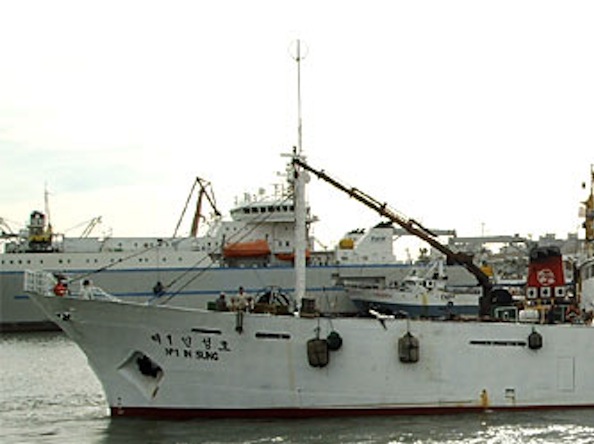
The State Department report identifies areas of strong concern for human trafficking in New Zealand including the use of overseas labour in the fishing industry.
Maritime Union of New Zealand General Secretary Joe Fleetwood congratulated the hard hitting nature of the report, which was a “major embarrassment” for the New Zealand Government and fishing industry.
“This report confirms and vindicates the stance of the Maritime Union that the deregulated industry and exploitation of overseas labour has been a stain on New Zealand’s reputation.”
“The Maritime Union has been pushing for action on this issue for a decade.”
Mr Fleetwood says the damage to New Zealand’s global reputation was hard to quantify.
“The blame must be put at the foot of the cowboy operators in the industry, and successive Government’s who soft pedalled the issue and only took belated action when forced to. The lesson being they can’t afford to sweep these dirty little secrets under the carpet anymore.”
New Zealand was now in position of damage control, he says.
The Government had now basically admitted the foreign crews issue in fishing was a “disaster zone” and the recently announced plan to phase out foreign charter vessels in the industry reflected this.
The Maritime Union of New Zealand, as an affiliate of the International Transport Workers Federation (ITF), has acted on a regular basis to assist foreign crew members in distress by representing their interests.
“This is simply something we do because in many cases these workers were being exploited and abused, and had nowhere else to go. In many cases the Maritime Union and ITF have gained substantial back pay owed and organized safe repatriation for crews to their country of origin.”
The Maritime Union was approached by State Department officials visiting New Zealand in 2011, including State Department Ambassador at Large Luis CdeBaca.
Mr Fleetwood says the Maritime Union was impressed by the thoroughness of the visiting delegation who were provided with a full briefing and documentation of the Union’s experiences.
The introduction to the State Department report prominently features an advertisement that appeared in the Otago Daily Times on 5 June 2007 offering a $1000 bounty for information on a ship jumping Indonesian fishing crew member.
The advertisement is compared in the State Department Report to advertisements that appeared in the United States in the nineteenth century for escaped slaves.