 A meeting of around 150 Auckland maritime workers held today had a simple message for Ports of Auckland management about plans to outsource labour to outside contractors: “not this century.”
Maritime Union of New Zealand Auckland Local 13 Garry Parsloe says the high turnout at the stopwork meeting reflected the major concerns of workers about contracting out in the port.
Workers were not prepared to see casualization and contracting out used to undermine wages and conditions, he says.
Mr Parsloe says workers felt management had pre-planned the contracting out approach prior to the signing of the Collective Employment Agreement (CEA) in 2009, and their recent comments indicated would hide behind legalities to force the issue.
“Obviously there would have been no agreement if there had been any indication the company were going to go down this path.”
He says any future negotiations will be extremely difficult for the company if they pursued a contracting out strategy.
“Ports of Auckland management seem to have the unhappy knack of finally getting a workable document, finally starting to rebuild a workable relationship, and then kicking the whole thing over and stirring up problems for themselves and the workforce.”
Mr Parsloe says that the current CEA between the Ports of Auckland and the Maritime Union of New Zealand is a flexible document that allows the company to meet the “Peaks and Troughs” of shipping.
He says the reason why the port is not operating at full capacity is because the Company not made proper use of three shift a week guaranteed stevedores, known as Axis Ancillary Employees in the CEA.
“The shortfall in trained stevedores is creating large delays in cargo exchanges and it is now a common sight to see trucks backed up waiting for boxes in the port.”
“Outsourcing has little to do with efficiency and everything to do with casualizing the workforce.”
Mr Parsloe says the financial return to Auckland ratepayers from the Ports of Auckland had been substantial over the past five years, due to the efforts of the workforce at the Ports of Auckland.
He says that “parochial and destructive” competition between ports had resulted in shipping companies being charged unrealistically low rates, and management were now trying to “bleed workers” to make up the shortfall.
“Maritime workers are not going to have their wages and conditions attacked to prop up the profits of global shipping companies.”
Welcome to the Maritime Union
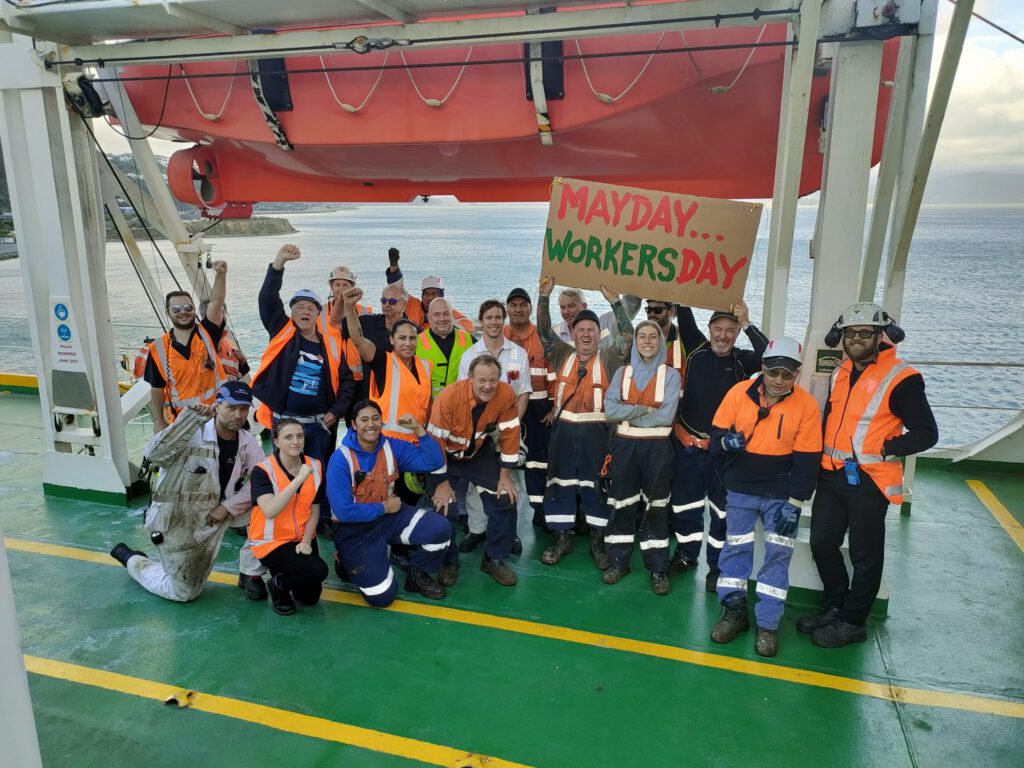
The Maritime Union of New Zealand was formed in 2002 when the New Zealand Waterfront Workers’ Union and the New Zealand Seafarers’ Union joined together. We represent waterfront workers, seafarers and related workers in New Zealand.