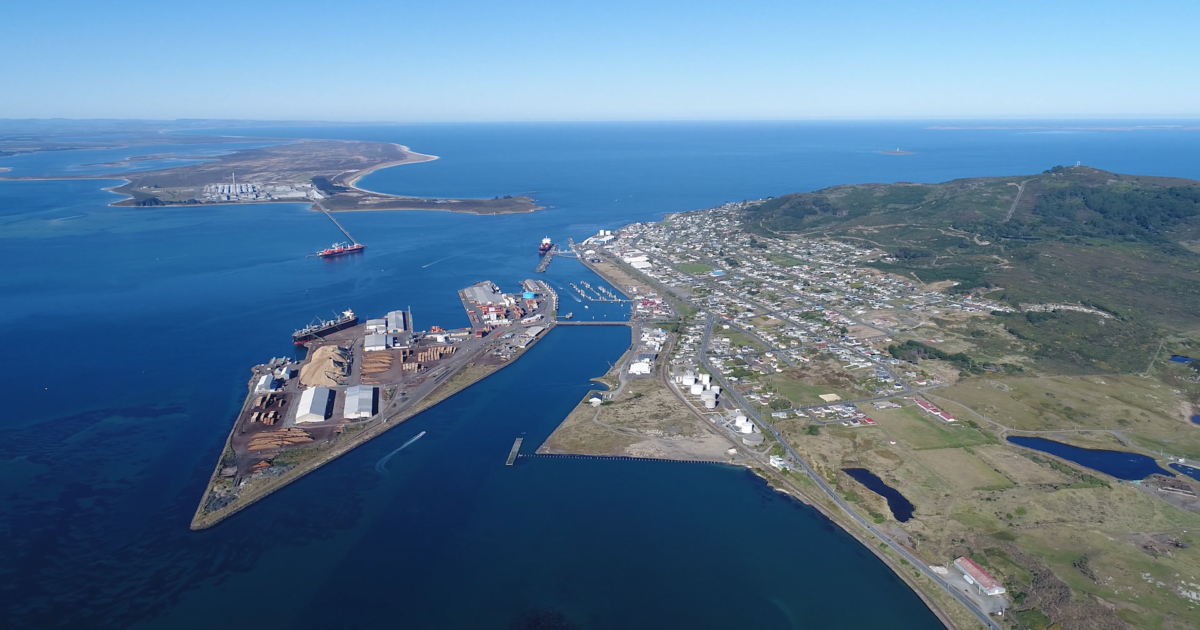
South Port in Bluff is facing strike action after port workers rejected a pay offer from management.
The Maritime Union of New Zealand has given notice of 48 hours of strike action to take place from 7am Wednesday 31 January ending 7am Friday 2 February 2024. There may be further action to follow.
Maritime Union Bluff branch secretary Ray Fife says the action comes after 60 members at South Port voted “overwhelmingly” in favour of strike action.
The Collective Employment Agreement expired on 31 August 2023 and negotiations have failed to resolve the differences between management and workers, says Mr Fife.
“The employer will not shift from a wage increase based off the Consumer Price Index (CPI), which is not acceptable to the workers.”
Mr Fife says living costs in the local area have risen higher than the CPI, especially with the cost of housing and rent.
He says the base rate for waterfront workers had historically been low and was currently at $25.30 per hour.
Even with skill-based pay tiers and overtime, wages were not meeting living costs for employees, many of whom have spent years with the company, he says.
Mr Fife says the port company has been performing well in the last two years, with higher returns than in the previous three years.
South Port had made substantial capital expenditure, which shows its confidence in the future of the port, he says.
“However, we feel that the contribution of the workforce towards the success of the port has been overlooked. The workers deserve a fair share of the profits and a recognition of their skills and experience,” he says.
Mr Fife says South Port has a majority holding by Environment Southland, and there is an expectation it would have a high level of social responsibility.
He says the 2023 South Port annual report had noted the difficulty in retaining and recruiting staff.
In 2023, there had been a 19% staff turnover rate with South Port admitting some key staff had been “poached” by other local businesses or other ports.
The Annual Report noted the company had “struggled” to fill some vacancies which had resulted in temporary workload pressures that “required careful management” to maintain safe operations and staff morale.
Mr Fife says an obvious solution to making employment at the Port attractive was a boost to the base pay rates, which would be more cost effective in the long term than a “churn” of departing and arriving workers with its negative impact on port performance.
He says a historically good relationship between the employer and port worker is being put in jeopardy by management’s stance.
Mr Fife says port workers were aware the compensation for directors, Chief Executive and senior management had risen from $2.33 million in 2022 to $2.71 million in 2023.
Thirteen managers at the port were making over $210,000 per annum in the 2022/2023 year.
The total remuneration of the Chief Executive for 2023 was $552,021 – an increase of 14.3% over the previous year.
Mr Fife said these increases were far more generous than what workers were seeking, and indicated a company that was doing well and could afford to invest in its workforce.
“We are willing to resume negotiations at any time, but we need a realistic offer from the company. We hope that they will come to the table with a better proposal that reflects the value of our work,” he says.

One Response
Solidarity with the MUNZ workers from a retired MUA member.