
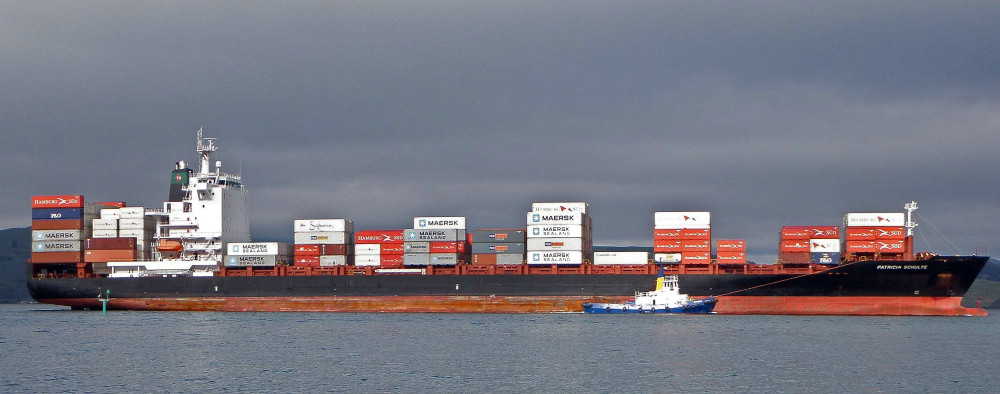

If the Covid-19 response has taught us anything, it’s that our economy lives and dies by our supply chains and that when push comes to shove New Zealand can’t always rely on the rest of the world.
But when it comes to shipping goods from one Kiwi city to another we are dependent on a handful of multinational companies running crews who are paid at “international” rates far below those of New Zealand crews. That makes our economy vulnerable.
It makes us vulnerable to the whims of multinational shipping companies that won’t commit to regional New Zealand and our domestic producers.
We’ve seen small ports make expensive investments to keep big shipping companies happy only to be dropped.
Allowing foreign-flagged vessels with low wages crews to carry goods between New Zealand ports makes it uneconomic to maintain a New Zealand flagged coastal fleet.
Yet, having our own coastal shipping vessels is vital to our regions and crucial when disaster strikes or international shipping is disrupted by economic crises. After the 2016 Kaikoura quake the one NZ flagged coastal container ship left in the country was critical to maintaining supply lines.
New Zealand coastal vessels used to trade trans-Tasman and Pacific routes, they will again if needed. Building up our coastal shipping fleet would create more opportunities to move goods by sea and reduce congestion on our roads. That’s less danger and wear and tear on our roads, and also less greenhouse emissions.
In their strategic working paper “Green Freight 2020” the Ministry of Transport notes that moving road freight to coastal shipping produces “significantly less GHG [greenhouse gas] emissions per tonne kilometre (tonne-KM) than road freight.”
Unfortunately this statement was made in the course listing coastal shipping as “out of scope” of the report. This reflects how coastal shipping has been ignored by consecutive governments.
The extreme free-market government in the 1990s removed protections for our coastal shipping fleet and legalised foreign-flagged vessels carrying good between domestic ports. New Zealand is unusual in allowing this.
Many countries, including the US, UK, Canada, Japan, and the EU have laws in place to protect their domestic-flagged coastal shipping industry. They have thriving domestic shipping as a result.
The law change required to fix this is tiny. Simply removing one short clause – s198© – from the Maritime Transport Act would protect our domestic shipping.
Once that’s done, we’d move to a “hub and spoke” model. Ideally with one or two international ports on each island receiving exports and delivering imported cargo for distribution by coastal shipping to smaller ports.
That would make it easier to prevent diseases entering the country by having fewer points of entry, and it would work for the ports too, with less duplication of biosecurity and customs requirements. The misplaced pressure for rationalisation of the ports would be gone.
It’s hard to imagine that the handful of megalithic corporations who dominate international shipping would care too much about losing domestic freight between the likes of Timaru and Gisborne.
So if it’s good for Kiwi workers and shipping companies, the roads, our ports and their local communities, our environment, and our economy why haven’t we done it already?
It’s not because the numbers don’t stack up. Aside from the economic resilience coast shipping brings, there are also direct fiscal gains in the hundreds of millions to low billions of dollars annually.
Is coastal shipping ignored because we’ve lost the capacity we need to do it right away? There would need to be a lead-in time to build infrastructure and skills. But neither of these issues are insurmountable. Business raises capital for new ventures all the time, and the Government has allocated billions to skills training.
No, I think the real reason we haven’t gone ahead with this is a lack of political will.
Recovering our coastal shipping industry after having it gutted by a bunch of blinkered ideologues in the 1990s requires government intervention.
It takes money, it means diverging from the hands-off approach of the last thirty years and legislating in the national interest, it means ruffling a few feathers among the minority of interests that favour the status quo.
That kind of change is not something that this Government or any other in the last three decades has had any taste for. Many in this Government and previous ones will decry the destruction of our coastal shipping industry. They have had working groups on it, they have written reports, parties have made it their policy. Business as usual.
Until now. The response to Covid-19 was instructive. It showed that to get things done for New Zealanders the Government needs to intervene with money and with law, and no matter what you do someone won’t like it.
The greatest lesson Covid-19 can teach us, if our leaders are willing to learn it, is that the free-market adjacent concept of government as little more than “capable managers” should be over. Managing the status quo isn’t how you do right by the New Zealanders who put your bums into Cabinet seats.
This lesson needs to be applied to the rebuilding of New Zealand flagged coastal shipping. We have been promised real change that makes us stronger as a nation. Let’s see some.

One Response
Some considerations:
* Coastal shipping not only competes with international shipping, but with rail — and that rail link across Cook Strait is a critical part of our freight services; and which, by definition, competes with coastal services as well. So also was the roll-on-roll-off coastal traffics, like (back in the day) Pacifica. Historically that didn’t have any international carriers’ involvement.
* The Government will still have to look at rationalising the port industry, especially in the South Island, but has avoided doing so out of local political considerations.