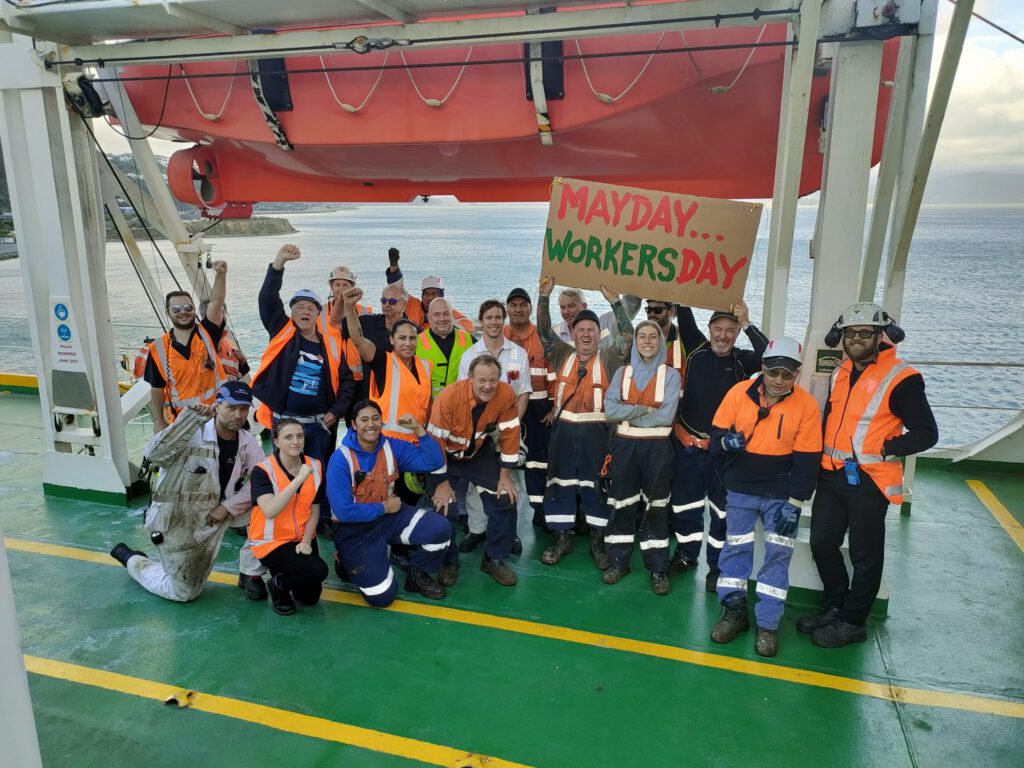

The Maritime Union of New Zealand has condemned global cement giant Holcim’s threats to use 500 trucks a month to transport cement on New Zealand roads, rather than crew a ship with New Zealand seafarers.
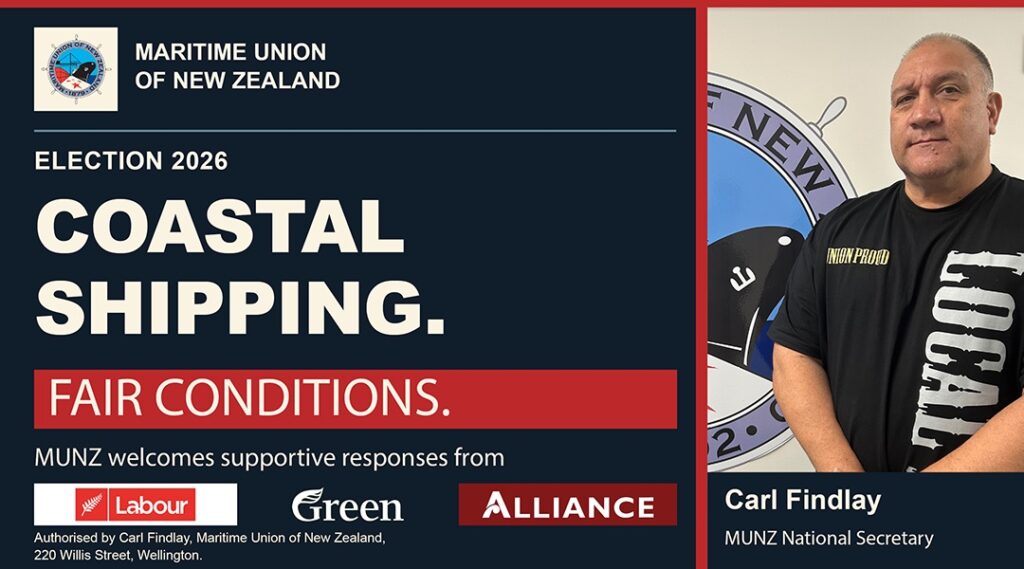
Maritime Union of New Zealand National Secretary Carl Findlay says Holcim management should stop digging itself into a bigger hole.
He says Holcim’s statement on 10 December 2025 that it will commence plans to haul approximately 15,000 additional tonnes of bulk cement in over 500 trucks on New Zealand roads every month is not a viable logistics solution.
“Holcim has a straightforward answer to their self-inflicted problem, which is to utilise a New Zealand-flagged and crewed vessel.”
Mr Findlay says the threats from Holcim appear to be an amateur attempt to strong-arm the New Zealand Government into disregarding New Zealand maritime law.
Mr Findlay says the Maritime Union reaffirms its strong support for the decision made by Associate Minister of Transport James Meager to uphold existing regulations.
Minister Meager correctly declined an application lodged by NovaAlgoma Cement Carriers (NACC) for an authorisation under Section 198(2) of the Maritime Transport Act to use a foreign-flagged and crewed ship to replace its local cement carrier MV Buffalo.
Mr Findlay says coastal shipping is the most efficient and lowest-emission method of bulk transportation, achieving significantly lower emissions per tonne of freight moved compared to road.
“Holcim’s threat to jam hundreds of trucks onto New Zealand roads through spite has destroyed its social licence and public credibility. This is a company generating multi-billion dollar global profits threatening environmental harm and supply chain risk on New Zealand, simply because it failed to find a loophole in the system.”
Mr Findlay says New Zealand industry stakeholders who rely on stable and ethical supply chains, particularly major construction and infrastructure clients, should note Holcim’s behaviour and move swiftly to its competitors for their cement supplies.
Holcim’s plan to replace the New Zealand-flagged MV Buffalo with the Panamanian-flagged NACC Vega crewed by foreign labour on inferior terms and conditions was a blatant attempt to exploit foreign seafarers and circumvent the law through Flag of Convenience (FOC) shipping.
For a global company that promotes itself as a sustainable, progressive business and ‘Top Employer 2025’, opting for a Kiwi-crewed coastal ship would be a sign of its commitment to New Zealand. Instead, Holcim is acting like a playground bully, says Mr Findlay.
“I wonder if the local management of Holcim has gone rogue, as it seems unlikely their corporate headquarters in Switzerland would be impressed by this type of behaviour.”
The Maritime Union says Holcim needs to apologise to New Zealand, accept the decision of the Government to abide by the laws of New Zealand, and negotiate for a New Zealand crew for a coastal cement vessel, says Mr Findlay.