The Maritime Union says New Zealand needs to keep its own fuel tankers on the coast to ensure fuel security, paid for by a small fuel levy.
Maritime Union of New Zealand National Secretary Craig Harrison says the closure of Marsden Point refinery was going to have a “domino effect” on New Zealand’s fuel logistics network.
He says apart from the Marsden Point–Auckland pipeline, domestic fuel is currently shipped by New Zealand-flagged tankers to regional ports for distribution.
Mr Harrison says the future of New Zealand coastal tankers is now in jeopardy, as Marsden Point owners Refining NZ plan to use international shipping to deliver fuel to regional ports in future.
He says this makes New Zealand at risk from any disruption to global shipping schedules, as had been seen with container shipping during the COVID pandemic.
“Maritime trade is very vulnerable at this point to supply chain shocks.”
Mr Harrison says a reliance on other countries to refine and transport our fuel was a high risk strategy and the Government may have been badly advised.
“There has to be a comprehensive survey of fuel security issues, that considers the wider implications of a fuel crisis on the New Zealand economy.”
He says a small fuel levy that provided a guarantee of New Zealand-flagged coastal tankers remaining on the coast would provide security and reduce risk in an unpredictable global environment.
Mr Harrison says New Zealand coastal tankers could be requisitioned to bring in fuel from overseas as well, in the event of an international crisis, whether conflict, technical problems or natural disaster.
New Zealand-flagged coastal tankers had been able to respond immediately with supplies when the Auckland pipeline failed in 2017.
“In the case of a national emergency, New Zealand flagged coastal tankers could provide essential backup services, unlike international shipping which has other priorities.”
He says a major financial event in global markets could result in ships being held by creditors, another potential source of disruption.
Mr Harrison says the collapse of the “just in time” supply chain model had moved the world to the “just in case” model, which placed a new emphasis on supply chain security and redundancy to protect from system failure.
He says accepting the word of a privately-owned company that things would be fine was not good enough, as the interests of Refining NZ and New Zealand were not the same.
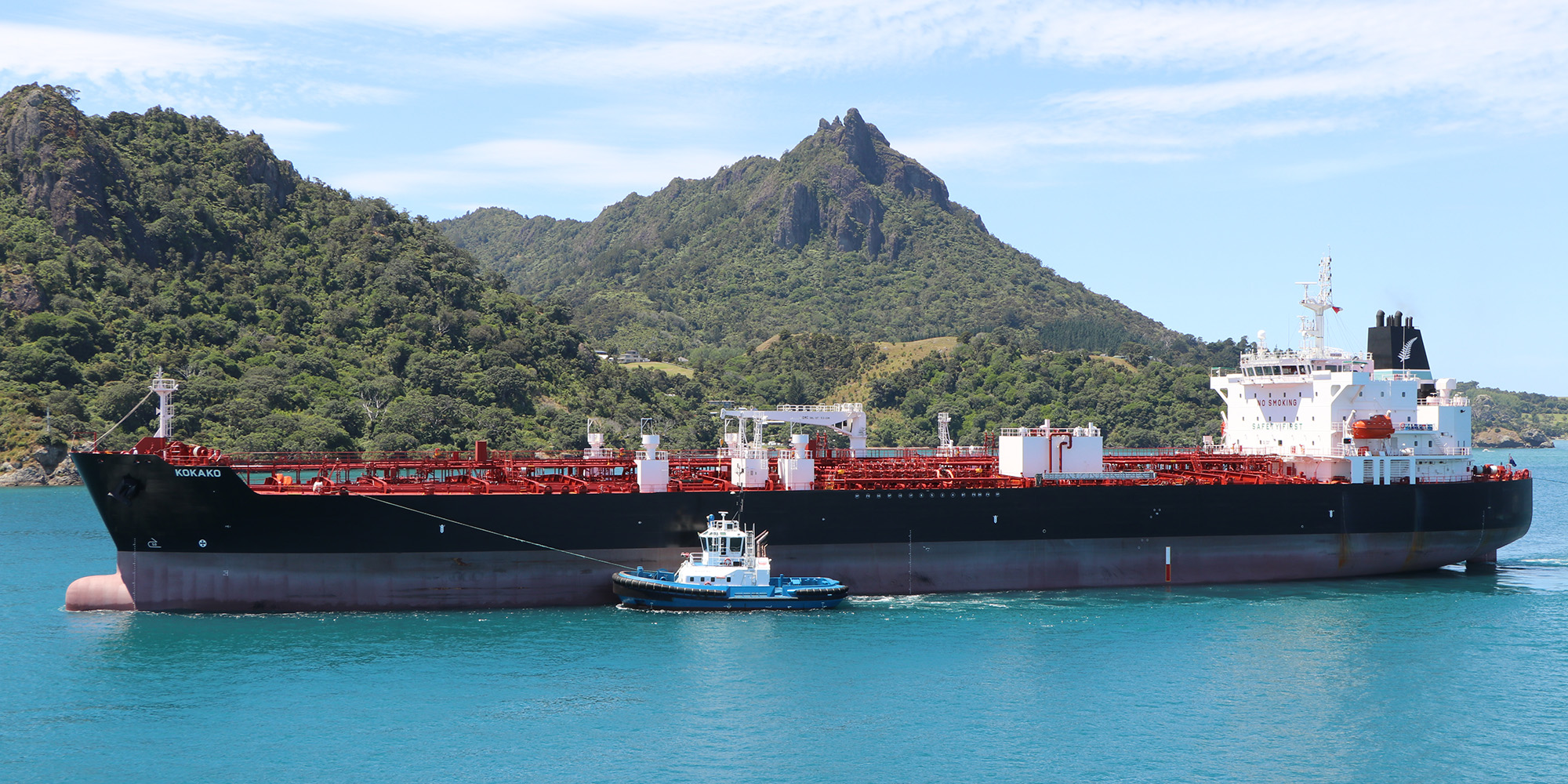
Two New Zealand flagged and New Zealand crewed coastal tankers currently operate on the New Zealand coast, the MT Kokako and the MT Matuku.
The vessels are managed by New Zealand operator Silver Fern Shipping Limited and owned by international operator ASP Ship Management Group, which charters them to Coastal Oil Logistics Limited (COLL).
COLL transports petroleum products from Marsden Point to New Zealand ports on behalf of its shareholders BP, Mobil and Z.
One Response
Solidarity to our MUNZ comrades from across the ditch from retired MUA member.